QuickBooks Online is the default for many small businesses, but it isn’t the right fit for all of them. Paid plans now run from $38 to $340 a month, businesses that sell products often need extra apps for stock control, and some owners simply want something simpler.
This guide compares six QuickBooks alternatives: what each does well, who it suits, and what it costs. It also covers who should stay on QuickBooks.
Quick comparison
| Software | Best for | Free plan | Paid plans from | Inventory |
|---|---|---|---|---|
| Vencru | Retailers and wholesalers who want inventory and accounting in one app | Yes | $6/mo | Built in |
| Xero | Growing businesses that want a large app marketplace | No | $27/mo | Basic, built in |
| Zoho Books | Businesses already using Zoho apps | Yes | $15/mo, billed annually | Professional plan and up |
| FreshBooks | Service businesses that bill for time | No | $23/mo | Not listed |
| Wave | Freelancers and very small businesses on a budget | Yes | $19/mo | Not listed |
| Sage 50 | QuickBooks Desktop users who want desktop-style accounting | No | $132.17/mo | Built in |
How to choose a QuickBooks alternative
- Do you sell products? Check whether stock, cost of goods sold and invoices update together, or whether you’ll need a separate inventory app.
- Check the true monthly cost. Count the plan you’ll actually need, add-ons, and extra users, not just the entry price.
- Make sure your accountant can work with it. Most tools support accountant access. Ask yours before you switch.
- Plan the move. Most tools import lists such as customers and products from CSV files. Few import historical transactions, so choose a clean start date.
1. Vencru
Best for: retailers, wholesalers and distributors who want inventory, invoicing and double-entry accounting in one app.
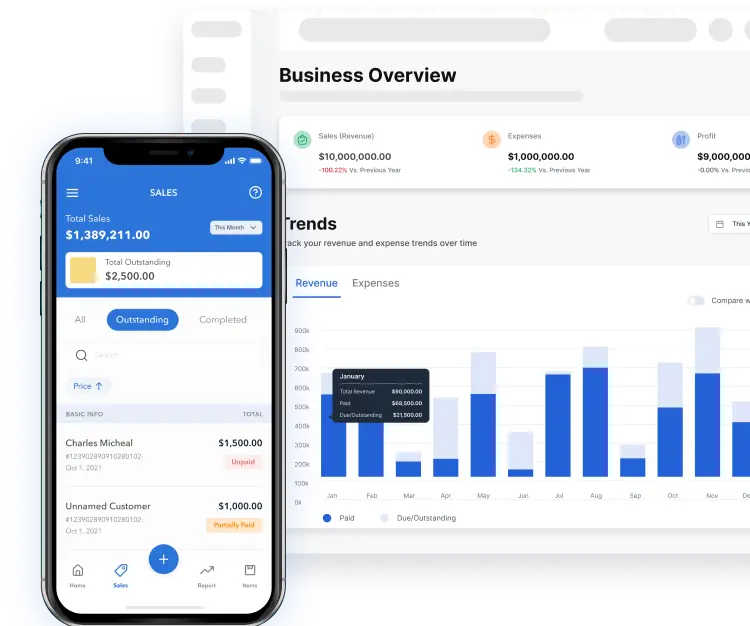
Vencru is built for businesses that sell products. Every plan includes inventory, invoicing and double-entry accounting, so an invoice or POS sale reduces stock and updates your books at the same time. Set reorder points by product and location, with low-stock alerts in the app and by email. Purchase orders convert to vendor bills in one click, and cost of goods sold uses average costing. Reports include profit and loss, balance sheet, cash flow, inventory valuation and sales tax. Orders from Shopify, Amazon and WooCommerce sync into Vencru, and Shopify sellers can use Vencru’s accounting inside Shopify.
Pricing: free plan with 15 invoices a month, no time limit and no card needed. Starter costs $6, Growth $30 and Enterprise $50 a month on monthly billing, with lower rates on longer terms, and there’s a 14-day trial of the paid plans. See Vencru pricing.
Worth knowing: Vencru doesn’t have QuickBooks-style AI agents, and purchase orders, vendor bills and the shipping tracker start on the Growth plan. For a feature-by-feature view, see Vencru vs QuickBooks, or read how Vencru’s inventory and accounting software works.
2. Xero
Best for: growing businesses that want a large app marketplace.
Xero covers invoicing, bills, bank reconciliation and reporting. Its built-in inventory tracks quantity and value using average cost. Multiple locations, reorder points and FIFO need Xero’s Inventory Plus or a third-party app.
Pricing (US): Early $27, Growing $59 and Established $97 a month.
3. Zoho Books
Best for: businesses that already use Zoho apps, or want a low-cost start.
Zoho Books handles invoicing, expenses, bank feeds and reports, and has a free plan. Inventory tracking, with reorder points, warehouses and batch tracking, comes on the Professional plan and up. Advanced inventory needs the separate Zoho Inventory add-on.
Pricing: free plan; paid plans from $15 per organization a month billed annually, or $20 billed monthly.
4. FreshBooks
Best for: service businesses and freelancers who bill for time and projects.
FreshBooks is known for simple invoicing, time tracking and client billing. Its pricing page doesn’t list inventory tracking, so product businesses should check it against their stock needs.
Pricing: Lite $23, Plus $43 and Premium $70 a month, with Select by quote. There’s a 30-day trial and no free plan.
5. Wave
Best for: freelancers and very small businesses that want free invoicing and bookkeeping.
Wave’s Starter plan is free and covers invoicing and basic accounting. Its pricing page doesn’t list inventory tracking.
Pricing: Starter $0; Pro $19 a month, or $190 a year.
6. Sage 50
Best for: businesses leaving QuickBooks Desktop that want a similar desktop-style product.
Sage 50 is installed accounting software with cloud access. It includes inventory management, purchase orders, job management and cash flow tools.
Pricing (US): Pro Accounting $132.17 and Premium Accounting $182.50 a month.
Prices as listed on each vendor’s website in November 2026. Check the vendor’s site for current pricing.
Who should stay on QuickBooks
QuickBooks is still a strong choice if you rely on its AI tools. Intuit’s AI in QuickBooks Online includes Accounting AI, which categorizes transactions and helps with reconciliation; Customer AI for leads and follow-ups; Payments AI and Finance AI for cash flow visibility and planning; and Sales Tax AI, which reviews returns before you file. Some of these depend on the plan you choose. If they save you hours each month, the higher price may be worth it.
It’s also worth staying if your accountant works only in QuickBooks, or if you depend on an integration that only works with QuickBooks.
How to switch from QuickBooks to Vencru
- Pick a start date, ideally the first day of a month or quarter.
- Export your lists from QuickBooks as CSV files.
- Import the CSV files into Vencru, then check product names, SKUs, quantities and costs.
- Record opening balances as of your start date, with your accountant’s help if needed.
- Run both systems for a short overlap if you want extra assurance, then switch.
Frequently asked questions
What is the best free alternative to QuickBooks?
For product businesses, Vencru’s free plan includes inventory, invoicing and accounting, with 15 invoices a month. Wave and Zoho Books also have free plans, aimed more at freelancers and service businesses.
Is there a QuickBooks alternative with inventory built in?
Yes. Vencru and Sage 50 include inventory management. Xero has basic inventory tracking, and Zoho Books adds it from the Professional plan.
Can I move my data from QuickBooks?
Yes, using CSV files. Export your lists from QuickBooks, then import them into the new software. Most tools, Vencru included, don’t import QuickBooks files directly.
Is QuickBooks Desktop being discontinued?
Not for existing subscribers, who can keep renewing. But Intuit has stopped selling most Desktop editions to new US customers, and the 2024 versions were the last annual releases. See Is QuickBooks Desktop going away?